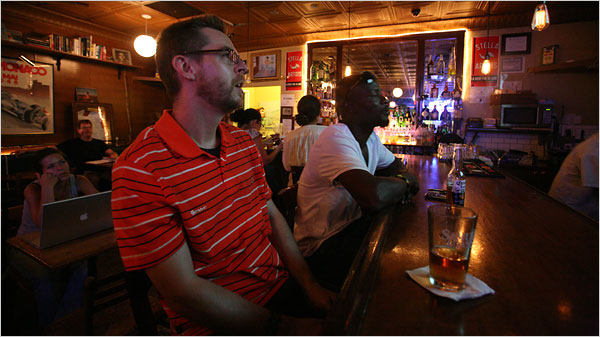
Courtesy of Michelle Agins (
NY Times)
Seems like everyone likes to make Gentrification their scapegoat. This is my take on why the NY Times tried to represent an alternative viewpoint in this article. Be it
ATLAH,
Craig Schley, or the random pissed off guy on the street, everyone has a bone to pick with "newcomers" who move to Harlem. But what's really going on here? Who are these so-called "Gentrifiers?" And what are the consequences of their actions? To address these questions, I have only my own personal experience...beginning in 1995 when I first moved here--through 2003 when I first purchased an apt on 145th--till today.
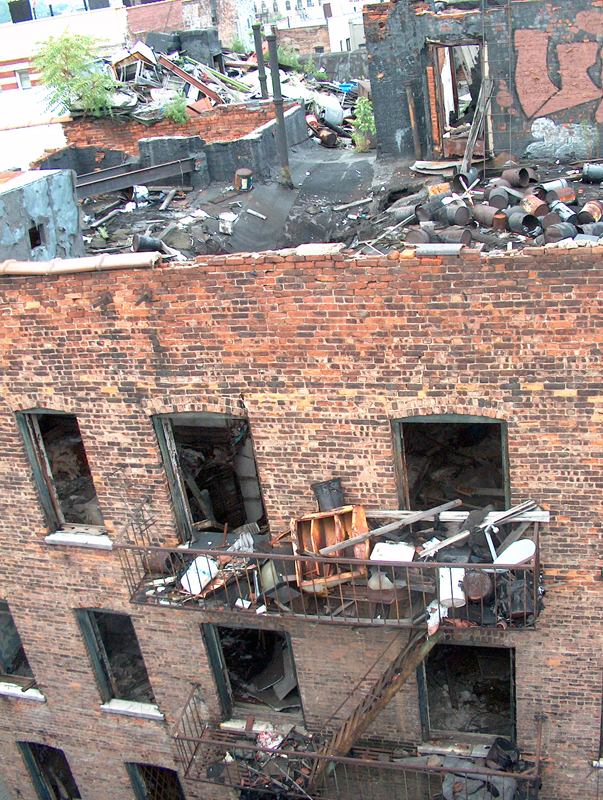
When I first moved to Harlem in 1995, the name of the game was survival. Many buildings were derelict and served as crack houses to groups of roving drug addicts. From 1995-2000 I was personally robbed about 5 times, with over 2 dozen attempts. The pic above is from the my former apt window, looking into the airshaft of 111th St. All of Northern Central Park, Morningside Park and even Riverside Park were nothing more than large camps of homeless crack addicts, robbing and harrassing people by day, scoring and smoking up by night. This endless pattern went on for years and years with seemingly no end in sight. During this time, Gentrification was a small pinprick of light on a very distant horizon, with many people praying for a reduction in the violence. It's sad to say, but many people did not make it through this phase, either claimed by violence, jail, drugs or a combination of all. Many of my personal friends--and a few enemies--were "taken out" never to return to the block again. Around 2000, things looked like they might improve, but slid two steps backward after the tragedy at the WTC. Finally, in late 2002, the momentum began to shift again...with 2 major Zoning Changes that were to subtley, yet inexorably, tilt the playing field towards Urban Renewal. Those changes were the rezoning of 145th St. from St. Nicholas Ave. to Lenox Ave. and of Frederick Douglas Ave from 110th to 125th St. I will focus on the
145th St. renewal in this post, and save FDAve. for a later one. After seeing the neighborhood crumble for so long, it was at this time the writing on the wall was clear to me. I also began to experience some anger in the fact that I had built up so many bonds in the hood, that would now seem "irrelavant" in this new wave of money coming down. So instead of lashing out, I put together a financial plan and I began to marshall my credit resources for a chance to enter into the Gentrficaiton Fray. I figured that I had just as much sweat equity in the neighborhood as the next man and so I entered into a few of the housing lotteries that I found on
nyc.gov. As a result of living in CB10, I was able to get housing preference...which resulted in me purchasing a brand-new 600 sq ft. 1 bedroom, for $156,500. When I closed in January 2004, it was like a dream come true...to have my own affordable NYC apt after all the years of struggling just to get heat and hot water! But the jubilation did not last long. The day I moved in, there was a shooting in front of my building, and there would be continued acts of intermitten violence throughout my stay there through October 2007. There were also numerous issues with the building, developer, City, tenants, the parking garage, the Super, the Co-op Board, plus the extremely complicated way the buidling was financed (its a condop) and mortgaged by HPD. But none of this derailed me--I loved my apt, building, neighbors, and Harlem in general--and resolved to see it through. Once the City and Gotham saw the success of our building, they set out to fill out the remaining corridor on 145th. Here's some pix of that transition.
The Langston, before demolition.
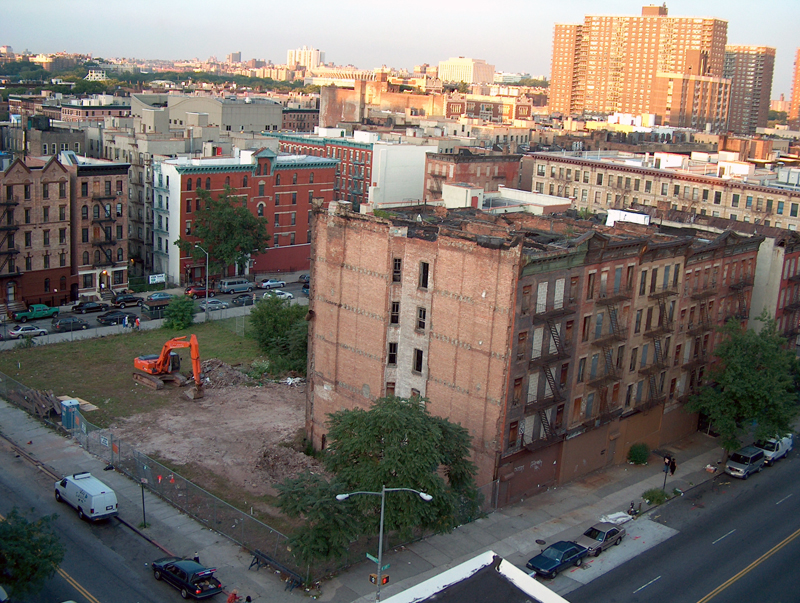

An interesting point to make here is regarding the argument that gentrification "pushes Native Haremites out." My response to this is yes and no. If you look at the picture, all of these residences and commercial spaces had been vacant for years before this pic was taken...with one exception. Obscured by a tree is a small sports bar located on the North side of this block. The guy who owned it, lived above it and was a Harlem native. When my then Super had to go over and inform him that he had been bought out and had to close his business, let's just say the reaction was not positive. But I will say this about it, yeah it sucks, he did get pushed out, but his business was a dangerous and borderline criminal establishment. Cops were always responding to his place on Saturdays and I'll never forget the New Year's Eve when I came home and couldnt get down the street because there was a huge stabbing. I vividly remember being escorted down the block, leaping huge puddles of blood--oddly enough with shiny quarters sprinkled throughout--to get to my door. So yeah, this one guy and his business did get forced out. Honestly, I was relieved that it did!
The Bradhurst under construction. (Drew Hamilton Projects in the background).


The Hamilton and Bradhurst today.
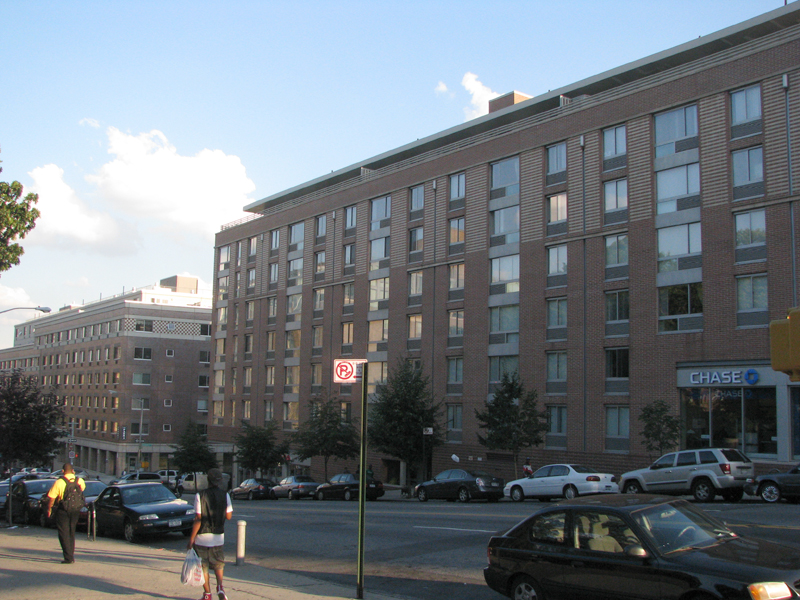
The Langston today.

Hillview Towers
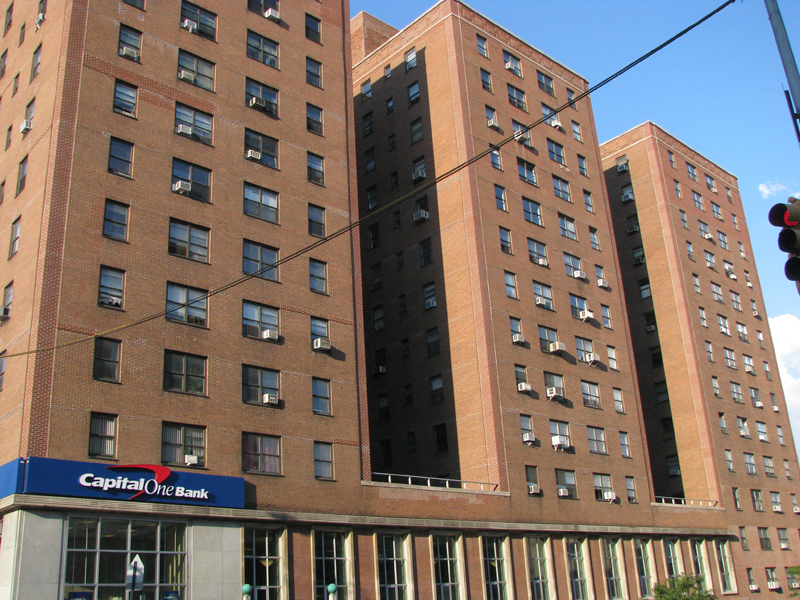
Drew Hamilton Houses
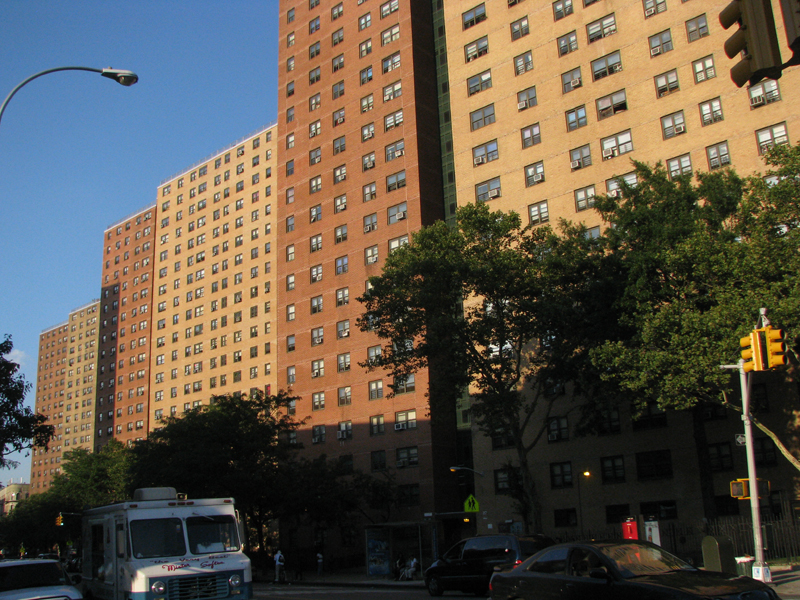
Pathmark


View from my former living room window.


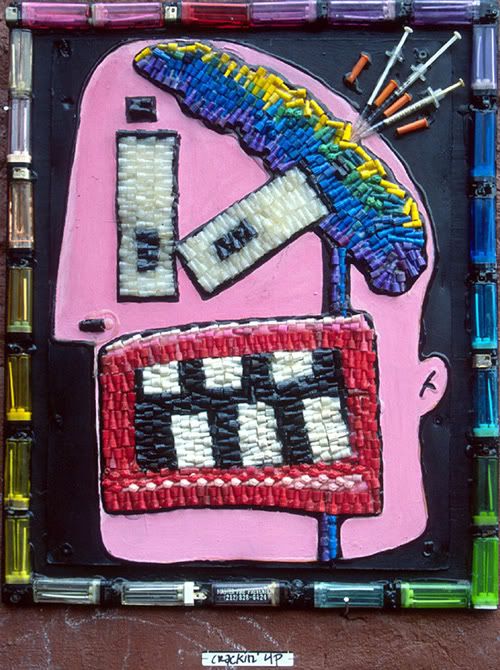


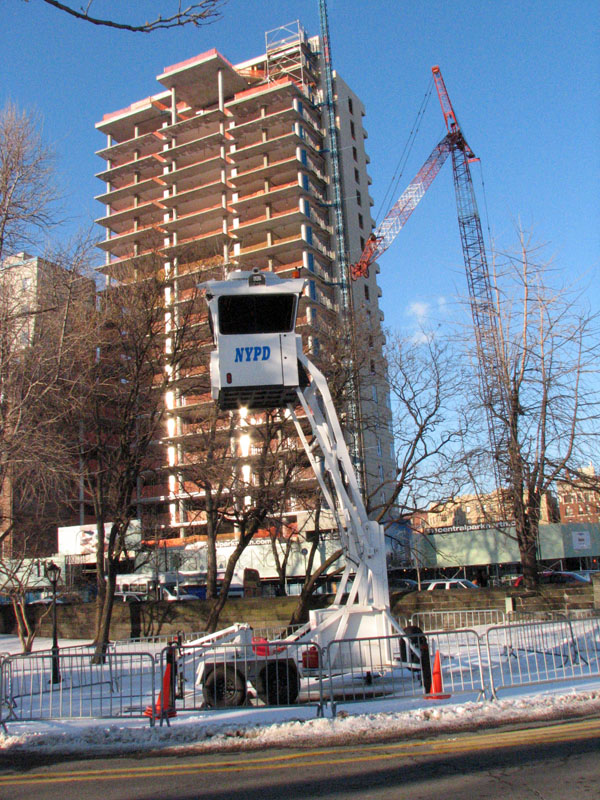 Living across from Central Park for eight years, I saw a lot of things go down. On more than one occasion I found crack either just in the Park or in front of my lobby. Alot has changed since then, but the spectre of drugs lies still lies just below the surface. Much of the recent violence in the area is due to rival drug gangs. Such activity seems at odds with the new crop of million dollar lofts. This cognitive dissonance can be hard to get one's head around, but I vividly remember the day that this neighborhood forever tilted in the direction of gentrification. It was a rainy night early 2002 and I had to get up before sunrise to go to my shitty job. I noticed the chicken place on 111th and Lennox was taped off with yellow police tape, as I ducked into the 2,3 station. Later that day I read that two dealers where shot by undercover DTs when they pulled out on them during an undercover buy. One of the dealers died, and the wounded one was tried and convicted of attempted murder of a police officer. After that, this block chilled way out, and paved the way for this next and second wave of gentrification...culminating in 111 Central Park North.
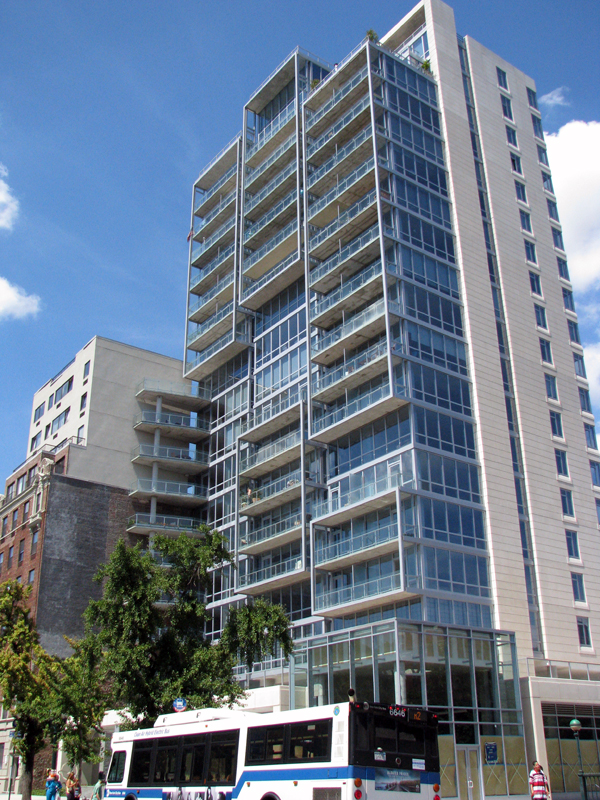 Breaking all records for apartments sold above 96th St., 111 CPN stridently boasted on its barricades, "Condos starting at 1.5 Million." I heard more that one derisive comment regarding that phrase while waiting for the bus.
 Still, it is a purty buidling...
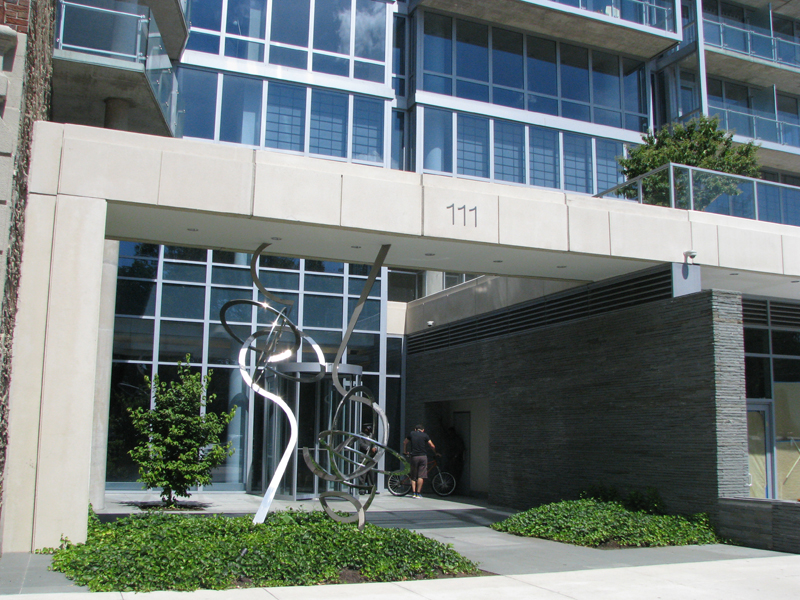 a little to shiny for my taste. Im sure the views are killer.
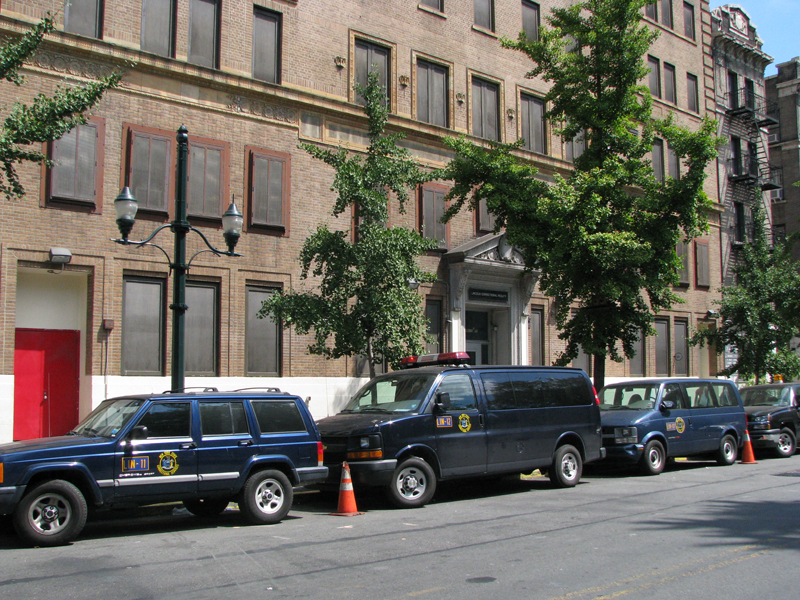
  And the venerable Lincoln Correctional Facility!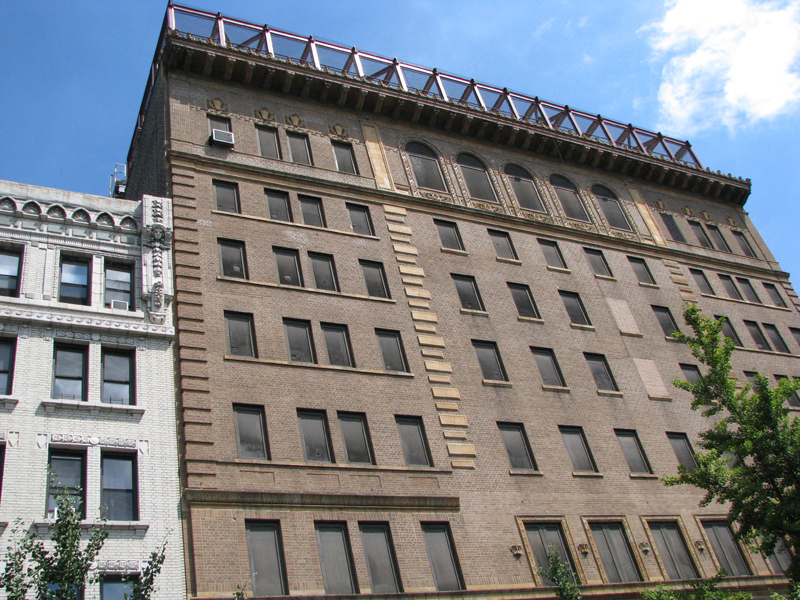
 I think this traffic circle is still 1 year from completion!
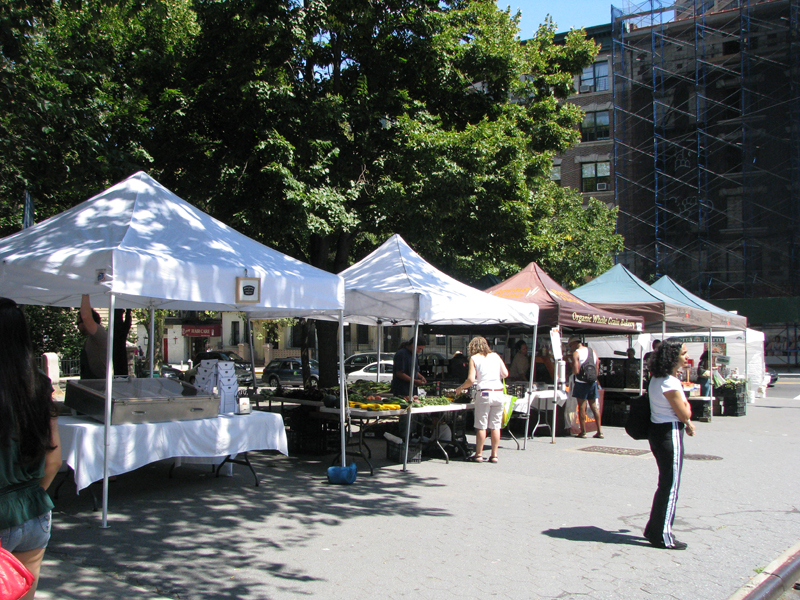
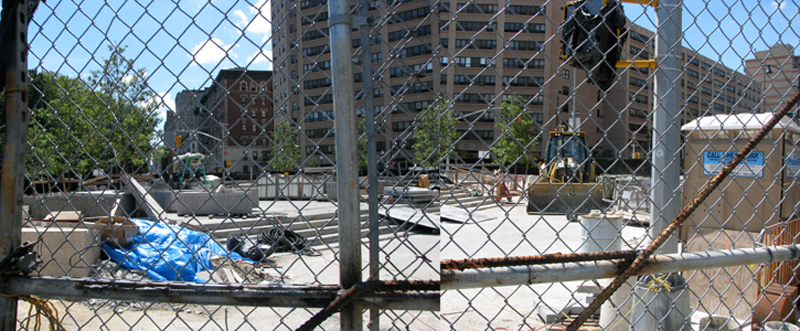 Now people only sell fresh produce in Morningside Park!
 Avalon Bay...rents starting at $3000
 The views are amazing!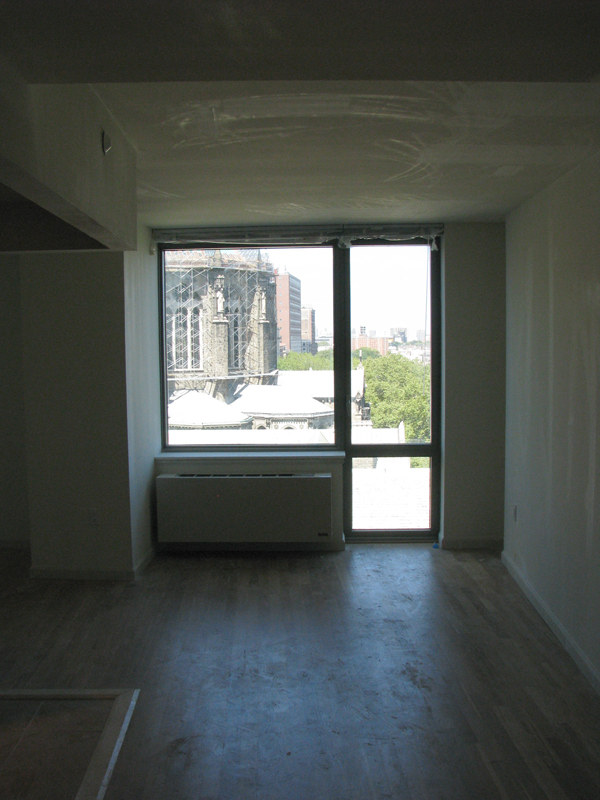
 My current buidling, The Dwyer, from Avalon Bay 14th floor.
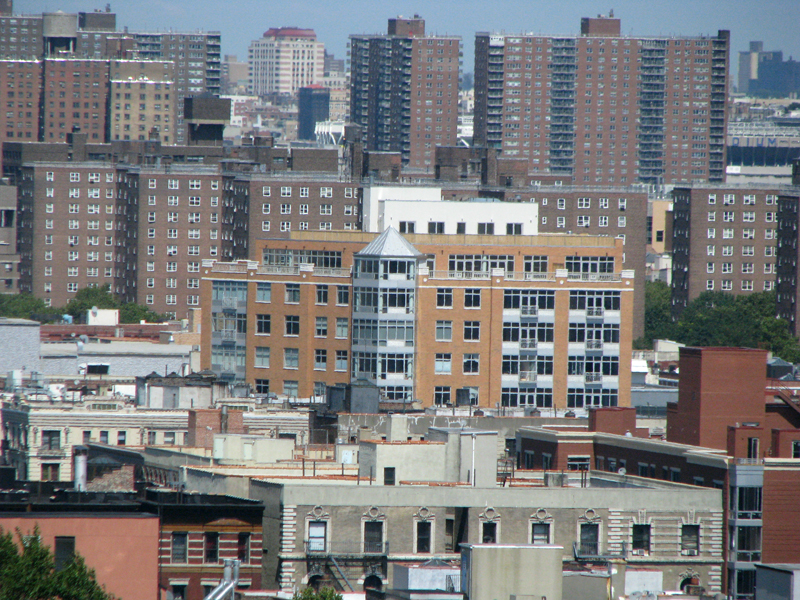 Crazy amenities too...great life if you can afford it!